
Learning Forward
Equity and excellence in teaching and learning.

IDEAS
Planting seeds for student success
By Learning Forward
Categories: Reaching all studentsOctober 2025

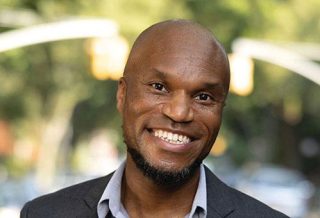
Educators and authors Shane Safir and Sawsan Jaber will deliver a keynote address at the Learning Forward Annual Conference in Boston, Massachusetts, on December 9, 2025. Safir and Jaber are co-authors, along with Marlo Bagsik and Crystal M. Watson, of Pedagogies of Voice: Street Data and the Path to Student Agency.
Shane Safir has worked at every level of the education system, from the classroom to the boardroom. She was the founding principal of an innovative and nationally recognized high school and now provides leadership coaching, strategic planning, and professional learning support across North America and beyond. She was lead author of the bestselling book Street Data.
Sawan Jaber has been a teacher, department chair, teacher educator, and curriculum designer. She has worked on national education reform and developing standards in the United States and now works with schools around the world. She has been Cook County Teacher of the Year, IDEA Teacher of the Year, an ISTE 20 to Watch Awardee, and was nominated for Illinois Teacher of the Year.
WHAT IS A PEDAGOGY OF VOICE AND HOW DOES IT BUILD ON YOUR PREVIOUS BOOK STREET DATA?
Shane Safir: A pedagogy of voice is both a way of being and specific instructional moves that educators can make every single day to awaken student  voice, catalyze cognitive and intellectual development, and affirm learner identity and belonging. This concept emerged in Chapter 5 of Street Data as an antidote to the dominant pedagogy of compliance. In that chapter, I laid out the student agency model as a North Star and new mark for education that invites educators at every level to transcend narrow metrics of success and aim for a more expansive and holistic goal: awakening student identity, belonging, mastery, and efficacy. In Pedagogies of Voice, we pivot from mastery to inquiry in order to describe in rich and textured ways how educators can cultivate students’ natural curiosity and structure dynamic and powerful dialogue.
WHAT IS STUDENT AGENCY AND WHY IS IT IMPORTANT TO TALK ABOUT RIGHT NOW?
Safir: Student agency is about educators being side by side with learners at the margins to help them develop their sense of identity and their voice and accelerate their own learning. Student voice is not fluff or something touchy-feely. It’s also not just about encouraging students to talk in class. We’re trying to disrupt the binary that there are people who care about student skills and people who care about student voice. Student voice is a vehicle for acceleration.
Sawsan Jaber: You can have a great teacher who has more content in their back pocket than anyone else, but if they don’t create a space where students can reclaim their power in the classroom, you are not going to have the return and the impact on student learning that you would like. 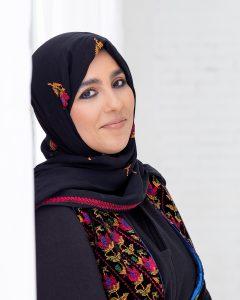 Educators throw the words differentiation and responsiveness around and they mean a lot of different things to different people. To us, in a pedagogy of voice, it’s about teaching the material in a way that’s connected to their identities and who they are and what they care about. When you take that approach, the learning becomes intrinsic and students learn more. And yes, they can take a test and do well on it because they have actually mastered the concepts.
When you center the pedagogies of voice approach, the work of teachers and administrators completely shifts. It transforms classrooms and schools immediately by offering an actionable framework rooted in eight pedagogies in practice, including teacher-created exemplars and design tools. And it makes teaching so much more enjoyable, because you see the impact on students in real time. That sparks excitement for educators to continue in the field. It encourages you to keep going.
YOU WRITE THAT ELEVATING TEACHER VOICE IS NECESSARY FOR ELEVATING STUDENT VOICE. WHY IS THAT?
Jaber: When we talk about agency for students, a big part of it is giving students the opportunity to show up as their full selves in a classroom space. How can you create that space for students if you don’t feel that you yourself are in a space where you can actualize that and model things like vulnerability?
Educational institutions are community institutions. They should be deeply rooted in the idea of holism for every human that exists in this space. When we talk about humanizing education, it’s every human, not just the students. It’s your teachers, principals, staff, everyone. It’s in the culture and ethos of the district or school so that everyone can show up as their full self.
WHAT DOES THAT MEAN FOR PROFESSIONAL LEARNING?
Jaber: As someone who has planned professional development at a district level and at a department level in schools, I see that administrators are often deciding for teachers what professional development should be. They don’t spend enough time collecting street data (information from observing in classrooms, talking to teachers, and the like) in order to really know what the needs are. In addition, many schools don’t give teachers time to really be creative and collaborate with each other and talk about what they’ve learned, what worked, and what didn’t.
We need to create space and time for people to leverage their creativity and take risks. Oftentimes teachers are not encouraged to take risks and make mistakes, so they prefer to play it safe and continue doing what feels good to them, which is often the way they were taught. Just as we tell our students that learning requires risk, we need to support teachers’ risk-taking and make space for teachers to work through mistakes if they happen.
Safir: Our colleagues, Marlo Bagsik and Jessica Wei Huang, came up with 10 microshifts to awaken teacher voice and agency — things like inviting teacher choice, centering teachers’ collective humanity, and making room to metabolize conflict and emotion. We provide strategies to achieve these microshifts and examples of how to incorporate them into coaching, learning walks, and other learning designs. We wanted to make it really practical for readers who have positional authority to design professional learning so it doesn’t feel like we’re just adding something new.
WHAT’S AN EXAMPLE FROM YOUR OWN EXPERIENCE?
Safir: In Chapter 11 of my first book, The Listening Leader, I offered a storytelling activity called core memory maps that was inspired by the Pixar movie Inside Out. In Chapter 10 of Pedagogies of Voice, we talk about how our book team formed a microcommunity shaped in part by our sharing of stories at a retreat through this very activity. This is one small example, but the idea is that our adult learning spaces need to enact a pedagogy of voice in which educators are deeply engaged in conversations about identity, belonging, inquiry, and efficacy.
Jaber: When I was a department chair working with a team of 30 teachers, we started every single department meeting with someone sharing their story, or whatever parts of their story they were comfortable with. This practice humanizes and creates deep-rooted connection, which is important because education is about relationships. Some of those educators had worked together for over 20 years but they were shocked by how much they hadn’t really known about each other. Talking about what makes you who you are and shapes how you act, what values you hold true and where they come from are deep-rooted ways of knowing, and they make a person whole.
YOU TALK IN THE BOOK ABOUT THE DIFFERENCE BETWEEN TEACHER AGENCY AND TEACHER AUTONOMY, WHICH SEEMS IMPORTANT IN THIS DISCUSSION.
Safir: We locate this distinction in philosophies of collectivism and individualism. The tradition of teacher autonomy fits more inside the individualistic model: I’m going to close my door and do my thing. Teacher agency is more of a collectivist concept. It’s not just about what I do within the four walls of my classroom but about how I am activating collective efficacy with the teachers I work with.
For teachers to feel collectively efficacious, there has to be a deep sense of relationship, of shared identity, of belonging. We’re not just showing up to log hours at this place together. We’re doing something really important together. This is just like the way we think about community among students. Educators have to experience the same kind of community we want to create for students.
HOW DOES THIS APPROACH FIT WITH CURRICULUM?
Safir: Many curriculum initiatives are technical solutions to a complex, generational challenge, which can keep us from reaching students and having impact in the ways we want. With Pedagogies of Voice, we’ve tried to craft an adaptive approach rather than a technical one. All four of us have been classroom teachers, so we know the importance of fostering teachers’ agency rather than providing a prescription.
This is not a set of top-down edicts, but it does provide a framework that offers guidance. We provide simple rules you can use to design classrooms in ways that shift student experience and student learning. They include four lenses of identity, belonging, inquiry, and efficacy and 10 ways of being — for example, curiosity, deep listening, and relationality.
Jaber: When I first read Street Data it transformed my life, because there were so many ideas I could take directly into my practice and adjust very minimally, and that transformed my classroom. Pedagogies of Voice was written with the same intentionality for practitioners at every level. It’s about making a mindset shift and heart shift but with guidance for making that actionable and transformative. We know that when people are given so-called magic formulas they don’t work in every context and space. Our approach gives you a robust set of options and ideas within a unifying framework so you can apply what works best in your community. Shane refers to it as a seed store, a metaphor that I think is beautiful.
WHAT WOULD YOU LIKE PEOPLE TO KNOW ABOUT YOUR KEYNOTE?
Jaber: I think it’s really hard to do any kind of professional learning today without acknowledging the fact that our world is on fire. Our book and our work aren’t going to put out the fire, but we’re going to take steps towards the healing work that is necessary.
Safir: This work is not partisan. It’s not about where you fall on the political spectrum. It’s about addressing the realities in which our children are living and creating the conditions for their learning. We need a way to do this that is agency-centered for teachers and young people, and that is about centering students in a loving way. As we open up that seed store and lay out options for people to consider, we hope they’ll walk away feeling excited and saying, “I’m ready to plant my garden.”
Download pdf here.

Learning Forward is the only professional association devoted exclusively to those who work in educator professional development. We help our members plan, implement, and measure high-quality professional learning so they can achieve success with their systems, schools, and students.
Categories: Reaching all students

CURRENT ISSUE
Recent Issues
LEARNING WITH AI
February 2026
Generative AI can be a powerful tool for professional learning design and...
WHAT STUDENTS NEED NOW
December 2025
For all students to thrive, we need to understand who they are and what...
LEARNING COMMUNITIES FOR LEADERS
October 2025
Leaders need opportunities to connect, learn, and grow with peers just as...
MAXIMIZING RESOURCES
August 2025
This issue offers advice about making the most of professional learning...