
Learning Forward
Equity and excellence in teaching and learning.

IDEAS
Q & A: Keeping the focus on kids
By Cornelius Minor
Categories: Coaching, Fundamentals, Learning designs, Personalization, Reaching all studentsAugust 2025

Cornelius Minor is a Brooklyn-based educator who teaches English language arts and coaches teachers, school leaders, and leaders of community-based organizations across the U.S. to create spaces that are student-centered and empowering for all young people. He and his partner Kass Minor lead The Minor Collective, a community-based movement to reimagine schools.
His latest book, We Got This, explores how the work of encouraging success for all learners is embedded in our everyday decisions, specifically in the choice to really listen to kids.
Minor will give the opening keynote address at the Learning Forward Annual Conference, held at the Boston Convention and Exhibition Center, on December 8, 2025. He recently spoke with The Learning Professional about his passion for engaging with young people, how he coaches other educators, and what he’ll explore during the conference.
As a teacher and a coach for other educators, building authentic connections with students is a big part of your approach. How did you come to focus on that?
I learned right away when I became an English teacher that the more I saw students’ humanity, the better they performed. I started coaching other educators because people would come to my classroom and ask, “How did you get all these kids to read these poems?” or “How did you get the kids to write this way?” I always tell them: It starts with connecting with students and seeing their humanity.
Understanding kid culture and community culture has been a cornerstone of my career. When I was in college, I played Pokémon pretty seriously and I got really good at it. When I became an educator, I had a Pokémon battle network going with students, and other educators started asking, “How does this guy speak student?” Well, I had just graduated from college and Pokémon was a popular thing. It was a natural way to connect.
When I started working outside of New York City my first job was in Seattle, and I would spend hours in playgrounds or on basketball courts learning the kids. Ever since then, whether it’s Pokémon, hip hop, sports, or video games, I’ve made it an intentional part of my pedagogy to speak all of those languages fluently. I can use them in the classroom, for example to give metaphors the kids relate to.
People always ask me how I know this stuff, and I tell them: I study it. I’m older now and I’m not in the youth culture anymore, but because I’m among kids I have to be fluent in the things that they’re fluent in.
There’s often a big gulf between educators’ and kids’ ages and cultures. When you work with teachers and principals, how do you help them think about crossing that gulf?
It’s a big shift and it goes against what many educators have traditionally believed. I’ll give you an example. I was standing in the cafeteria of a middle school in the Bronx and a kid had his headphones on. As a teacher, I have to ask him to take them off, but before I do that, I always ask the students what they’re listening to, because I want to know them and connect with them. With this kid, it was the third time we had to remind him to take the headphones off, but I still asked about his music. And before he could answer, the teacher standing next to me said, “Filth. That’s what he’s listening to.”
I find that kind of antagonism is pretty rampant in teaching, even if it’s not always articulated so explicitly. To counter it, I try to model a different approach. A principal recently asked me to work with a group of rising eighth graders on being leaders in their school. When I first met them, I asked them about the things they love and want to do. I didn’t just listen to what they said — I wrote it down. When they told me about their favorite anime characters, I stopped and asked them how to spell the names and told them I wanted to make sure I got it right so I could read the books. Even though I might not choose to read them in my personal time, I’ll read them in my professional time because it’s important to them and it’s therefore important to me. All the kids saw that I valued what they were saying. A lot of the other teachers saw it, too.
The next day, I had to walk this large group of kids to a park a mile and a half away. The teachers noticed that the kids were listening to me and they wondered how I had earned their respect. When we got to the park, all the teachers were kind of on the periphery of the soccer game, not engaging with the kids. There was still this gulf, literally, between young people and adults. Now, I don’t play soccer as well as I used to, but I got in the game and just started heckling kids and hugging them and giving them high fives, just kind of being in their midst. As soon as I did that, other adults saw the impact that it had on the young people, so then they stepped onto the field. They saw how I was building relationships and they wanted those relationships too. This leading by example is more powerful than if I stood off to the side and waved my finger and said, “Hey, this would go a lot better if you engaged with the kids.”
Here’s another example of modeling for teachers. A lot of teachers use shaming techniques. In one school I worked with, there was a teacher who would put kids’ names on the board every time they came in late and give them demerits. I wanted to show the negative impact of this on kids. So when I held a meeting after school, I put demerits on the board for all the teachers who came in late. They were so offended. They said it was unprofessional and that I was embarrassing them. I pointed out that some of them were doing the same thing to kids, and it probably made kids want to quit just like it made the adults want to quit. It helped them shift their perspective.
Relationships lay the foundation for student learning. Where does academic rigor come in?
The first place I start whenever I’m working with principals, school boards, or superintendents is looking at the definition of rigor. A task is not rigorous because it is hard or canonized. Rigor in English language arts is about how one engages with the text. I can have an incredibly rigorous engagement with Dr. Seuss if I look at motifs and themes and use of color. I can also have an incredibly flat engagement with Nathaniel Hawthorne if I’m just summarizing or looking at vocabulary words. So I always challenge school leaders to say, “Okay, how are we finding texts that really speak to our students and then engaging with those texts in rigorous ways?”
For example, I’m working with a group of eighth and ninth graders who are new to this country. One of the places where I start them is E.B. White. One could argue that you should not read Charlotte’s Web with ninth graders, but it’s about the way we engage. These kids who are new to the country have experienced loss and trauma, and so we read the book through the lens of loss and reimagination of home. It’s an incredibly rigorous engagement with a simple accessible text that speaks to them.
You can be rigorous and responsive and developmentally appropriate all at the same time. You can use standardized curricula and tailor resources to students at the same time. I go back to Thurgood Marshall and the Brown v. Board of Education decision and to thinkers like Carter G. Woodson who pointed out that there were whole communities of folks, specifically Black folks, who were denied access to materials and resources that their white peers had access to. You had kids in this country who were studying Chaucer and Shakespeare in high school, and then down the block kids who were getting whatever hand-me-down books happened to be available. Standardized curricula help ensure that every kid from New York to Idaho to California can have access to the same thing.
At the same time, I believe in responding to what kids in specific communities need. As an English teacher, I know that literature doesn’t exist in a vacuum. We teach literature so people know how to deal with the human condition, and the human condition varies from locale to locale. I just did a character study with a group of fifth graders in Colorado. We looked at how characters treat one another, analyzing their dialogue, inner thinking, and actions. It went so well that I decided to do the same character study in Brooklyn when I got back home.
But to be a kid in Brooklyn is very different than to be a kid in Colorado. One of the Brooklyn students said, “Oh my gosh, the way we’re paying attention to people’s actions and what they say, I can use this on the subway when I’m trying to determine if I’m safe or not. Just like we make inferences about these characters in the books, I can make inferences about the people who are surrounding me.” And I said, “Absolutely.”
Two different character studies came out of the same exercise. If I had stuck to a predetermined script or had a narrow view of what I wanted the students to learn, I would have shortchanged the kids in Colorado and the kids in Brooklyn. Teachers need the flexibility to say, “The curriculum says that every kid needs to do an in-depth character study. All right, so what does that mean if my kids live in Colorado — how are they going to use that character study in life? And what does that mean if my kids live in Brooklyn?”
Amid a lot of uncertainty in the world right now, many educators are feeling anxious and stressed. What advice do you share with other educators about navigating this moment?
I think educators right now are being pressed and challenged in ways that we’ve not seen in this historical cycle. But we have seen them before, so I have been drawing inspiration from a well of history. Interestingly, I’m more inspired now than I have been in a long time.
I’ve been thinking a lot about Carter G. Woodson, Fannie Lou Hamer, and Elaine Brown — all educators or leaders who took hard moments and guided groups of young people to places that allowed them to grow and thrive. I’ve also been learning a lot from Susan B. Anthony and others who organized the women’s suffrage movement. When I think about the things these people accomplished, like how Elaine Brown expanded access to breakfast programs for children, I ask, “How did this person face the challenge? What did they do alone and collectively? What did they do first, second, third? What tools did they use?” I see a pattern of working with small groups of people, then sharing your findings with larger groups of people, and then helping groups communicate with each other.
People who become educators, myself included, are typically conflict and risk averse. The thing I am learning about all of my heroes is they did not turn away from conflict. They faced it and navigated it. That’s how I’m thinking about it — that all these people have left us this incredible legacy and I’m really inspired by it.
What do you want people to know about your keynote for the 2025 Learning Forward Annual Conference?
I want them to know that it’s going to be a really good time! Even in these stressful times, I believe there’s still room for joy and there’s still room to dream. One of my favorite photographs is of the writers James Baldwin and Doris Jean Castle of CORE dancing together at a party in 1963. When you look at it, you first think, “How can James Baldwin be having a party in this moment, when he is most oppressed?” But then you realize — the fact that he found a way to preserve his joy, embrace his community, and express his creativity even when things were dire is what made him James Baldwin. So I hope when people come to this conference keynote, they find joy, creativity, and hope.
I also want people to know that I’m crafting the keynote to be almost like a dialogue, because this moment we’re in right now doesn’t need more monologues. I’m looking forward to connecting with everyone. I plan to have lots of hallway conversations, table conversations, side of the room conversations. Connection is what this moment really needs.
Download pdf here.
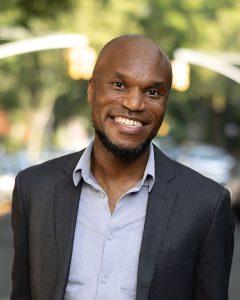
Cornelius Minor is a Brooklyn-based educator who teaches English language arts and coaches teachers, school leaders, and leaders of community-based organizations across the U.S. to create spaces that are student-centered and empowering for all young people.
Categories: Coaching, Fundamentals, Learning designs, Personalization, Reaching all students


CURRENT ISSUE
Recent Issues
LEARNING COMMUNITIES FOR LEADERS
October 2025
Leaders need opportunities to connect, learn, and grow with peers just as...

MAXIMIZING RESOURCES
August 2025
This issue offers advice about making the most of professional learning...
MEASURING LEARNING
June 2025
To know if your professional learning is successful, measure educators’...
NAVIGATING NEW ROLES
April 2025
Whether you’re new to your role or supporting others who are new,...