
Learning Forward
Equity and excellence in teaching and learning.

FOCUS
Look beyond the satisfaction survey
By Thomas R. Guskey
Categories: Continuous improvement, Data, Evaluation & impactFebruary 2024

Professional learning is vital to address the multiple issues facing educators today. Recovering from declines in student achievement brought about by the COVID-19 pandemic requires educators to prioritize learning goals and develop new ways to accelerate students’ learning progress. Political discord, social tensions, and global conflicts compel teachers to guide students in exploring diverse perspectives and engaging in constructive, respectful dialogues. Furthermore, the rapid evolution of technology, particularly artificial intelligence (AI), necessitates teachers and school leaders to consider entirely new paradigms in instructional methods and assessment. At the same time, there is a great need for credible evidence on the effectiveness of professional learning. Rachel Garrett and her colleagues (2021) conducted an extensive meta-analysis of high-quality studies of teacher professional learning published between 2010 and
Read the remaining content with membership access. Join or log in below to continue.
Sed ut perspiciatis unde omnis iste natus error sit voluptatem accusantium doloremque laudantium, totam rem aperiam, eaque ipsa quae ab illo inventore veritatis et quasi architecto beatae vitae dicta sunt explicabo. Nemo enim ipsam voluptatem quia voluptas sit aspernatur aut odit aut fugit, sed quia consequuntur magni dolores eos qui ratione voluptatem sequi nesciunt. Neque porro quisquam est, qui dolorem ipsum quia dolor sit amet, consectetur, adipisci velit, sed quia non numquam eius modi tempora incidunt ut labore et dolore magnam aliquam quaerat voluptatem.
Backward planning keeps the focus on students
The five-level evaluation framework is helpful for planning professional learning. Start with the end goal of improvement in student learning, then work backward to identify the steps to get there. Follow this process:
- Define the desired student learning outcomes (level 5).
- Determine the instructional practices and policies to achieve the outcomes (level 4).
- Identify organizational support needed to implement the practices and policies (level 3).
- Determine the knowledge and skills needed to implement the practices and policies (level 2).
- Select or design learning experiences that increase the knowledge and skills (level 1).
References
Garrett, R., Zhang, Q., Citkowicz, M., & Burr, L. (2021). How Learning Forward’s Standards for Professional Learning are associated with teacher instruction and student achievement: A meta-analysis. Center on Great Teachers & Leaders, American Institutes for Research.
Guskey, T.R. (1998). The age of our accountability. Journal of Staff Development, 19(4), 36-44.
Guskey, T.R. (2000). Evaluating professional development. Corwin.
Guskey, T.R. (2001). The backward approach. Journal of Staff Development, 22(3), 60.
Guskey, T.R. (2002). Does it make a difference? Evaluating professional development. Educational Leadership, 59(6), 45-51.
Guskey, T.R. (2007). Multiple sources of evidence: An analysis of stakeholders’ perceptions of various indicators of student learning. Educational Measurement: Issues and Practice, 26(1), 19-27.
Kirkpatrick, D.L. (1959). Techniques for evaluation training programs. Journal of the American Society of Training Directors, 13, 21-26.
Learning Forward. (2022). Standards for Professional Learning. Author.
McLaughlin, M.W. (1976). Implementation as mutual adaptation: Changes in classroom organization. Teachers College Record, 77(3), 339-351.
Newman, D. (2010). An empirical validation of Guskey’s professional development evaluation model using six years of student and teacher level reading data. [Doctoral dissertation, Cleveland State University.] EngagedScholarship@CSU.
Ross, A.H. (2010). Application and utility of the Guskey professional development evaluation model in a community college setting. [Doctoral dissertation, University of Tennessee.] Tennessee Research and Creative Exchange.

Thomas R. Guskey, PhD, is Professor Emeritus in the College of Education, University of Kentucky. He is a longtime member of Learning Forward, best known for his work on teacher change and on planning, implementing, and evaluating effective professional learning. Contact him by email at guskey@uky.edu, on X at @tguskey, or at www.tguskey.com.
Categories: Continuous improvement, Data, Evaluation & impact

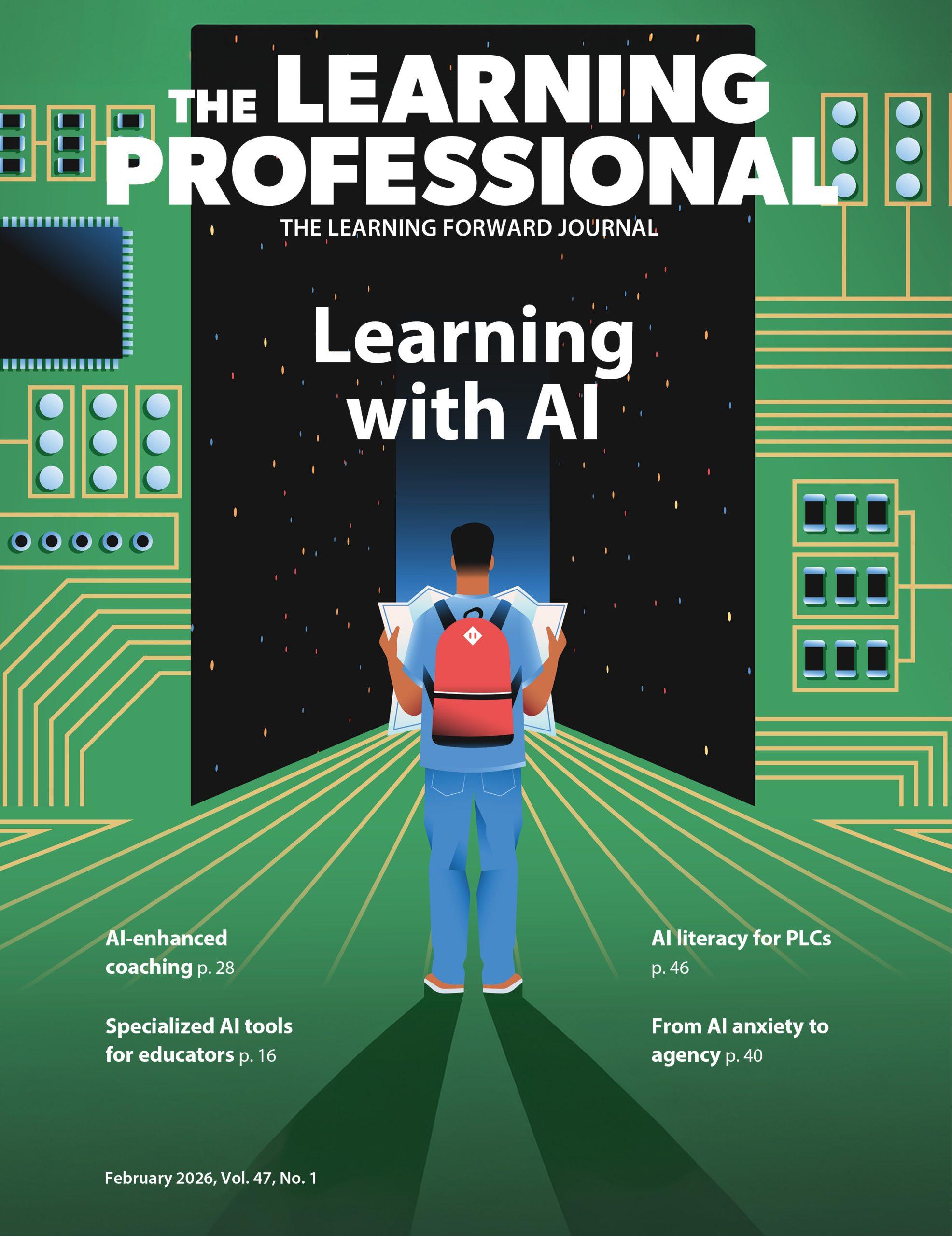
CURRENT ISSUE
Recent Issues
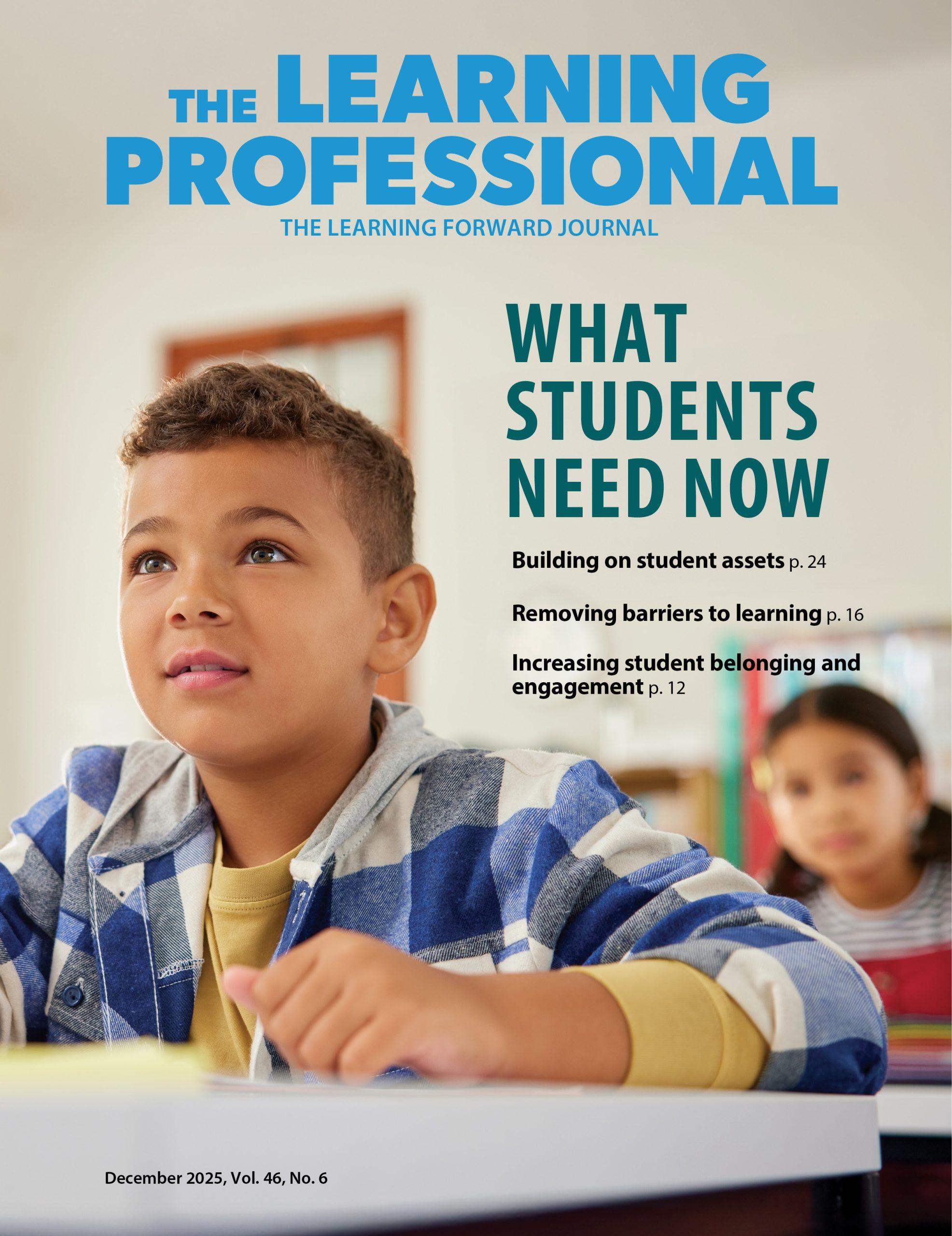
WHAT STUDENTS NEED NOW
December 2025
For all students to thrive, we need to understand who they are and what...
LEARNING COMMUNITIES FOR LEADERS
October 2025
Leaders need opportunities to connect, learn, and grow with peers just as...
MAXIMIZING RESOURCES
August 2025
This issue offers advice about making the most of professional learning...
MEASURING LEARNING
June 2025
To know if your professional learning is successful, measure educators’...