
Learning Forward
Equity and excellence in teaching and learning.

IDEAS
Multilingual students benefit when grade-level and specialist teachers collaborate
By Leslie M. Babinski, Steven J. Amendum, Steven E. Knotek and Jennifer C. Mann
Categories: Collaboration, English learners, Teacher leadershipDecember 2024

Most teachers in public schools (67.3%) will have at least one multilingual learner in their class, yet many have no preparation for supporting these students (NCES, 2022; Johnson & Wells, 2017). For example, less than half of teachers (47.9%) have taken a course on how to provide effective instruction for multilingual learners (NCES, 2022). Recognizing this gap, school district administrators have called for more professional learning about instructional strategies for students who are learning English and academic content simultaneously (U.S. Government Accountability Office, 2009). A promising approach is professional learning that provides opportunities for meaningful collaboration between grade-level classroom teachers and ESL (English as a Second Language) teachers. This can be especially impactful in the early elementary grades because oral language and literacy development in
Read the remaining content with membership access. Join or log in below to continue.
Sed ut perspiciatis unde omnis iste natus error sit voluptatem accusantium doloremque laudantium, totam rem aperiam, eaque ipsa quae ab illo inventore veritatis et quasi architecto beatae vitae dicta sunt explicabo. Nemo enim ipsam voluptatem quia voluptas sit aspernatur aut odit aut fugit, sed quia consequuntur magni dolores eos qui ratione voluptatem sequi nesciunt. Neque porro quisquam est, qui dolorem ipsum quia dolor sit amet, consectetur, adipisci velit, sed quia non numquam eius modi tempora incidunt ut labore et dolore magnam aliquam quaerat voluptatem.
References
Babinski, L., Amendum, S., Carrig, M., Knotek, S., Mann, J., & Sánchez, M. (2024a). Professional learning for ESL teachers: A randomized controlled trial to examine the impact on instruction, collaboration, and cultural wealth. Education Sciences, 14(7), 690. doi.org/10.3390/educsci14070690
Babinski, L.M., Amendum, S., Carrig, M., Knotek, S., & Sánchez, M. (2024b). Teaching young multilingual learners: Impacts of a professional learning program on teachers’ practices and students’ language and literacy skills [Manuscript under review].
Babinski, L.M., Amendum, S., Knotek, S., Sánchez, M., & Malone, P. (2018). Improving young English learners’ language and literacy skills through teacher professional development: A randomized controlled trial. American Educational Research Journal, 55(1), 117-143.
Baker, S., Lesaux, N., Jayanthi, M., Dimino, J., Proctor, C.P., Morris, J., Gersten, R., Haymond, K., Kieffer, M.J., Linan-Thompson, S., & Newman-Gonchar, R. (2014). Teaching academic content and literacy to English learners in elementary and middle school (NCEE 2014-4012). National Center for Education Evaluation and Regional Assistance, Institute of Education Sciences, U.S. Department of Education.
Cain, K. (2015). Literacy development. The interdependent roles of oral language and reading comprehension. In R.H. Bahr & E.R. Silliman (Eds.), Routledge Handbook of Communication Disorders (pp. 204-214). Routledge.
Desimone, L.M. (2009). Improving impact studies of teachers’ professional development: Toward better conceptualizations and measures. Educational Researcher, 38(3), 181-199.
Johnson, T. & Wells, L. (2017). English language learner teacher effectiveness and the Common Core. Education Policy Analysis Archives, 25(23). doi.org/10.14507/epaa.25.2395
Learning Forward. (2022). Standards for Professional Learning.
National Center for Education Statistics. (2022). English learners in public schools: Condition of education. U.S. Department of Education, Institute of Education Sciences.
Northwest Evaluation Association. (2011). Technical manual: For Measures of Academic Progress (MAP) Measures of Academic Progress for Primary Grades (MPG). Author.
Schrank, F.A., McGrew, K.S., & Dailey, D.E.H. (2010). Woodcock-Muñoz Language Survey – Revised Normative Update. Riverside Publishing.
Snow, C.E. & Matthews, T.J. (2016). Reading and language in the early grades. The Future of Children, 26(2), 57-74.
U.S. Government Accountability Office. (2009, July). Teacher preparation: Multiple federal education offices support teacher preparation for instructing students with disabilities and English language learners, but systematic department-wide coordination could enhance this assistance (Publication No. GAO-09-573). Author.
Yosso, T. (2005). Whose culture has capital? A critical race theory discussion of who has wealth. Race, Ethnicity and Education, 8(1), 66-91.

Leslie Babinski is a Research Professor in the Center for Child and Family Policy in the Sanford School of Public Policy at Duke University. She received her doctorate in Educational and School Psychology from the University of California, Berkeley. Dr. Babinski’s research focuses on teacher professional learning and school-based interventions to improve student outcomes.

Steven J. Amendum is Professor and Director of the School of Education at the University of Delaware. He received his doctorate in literacy education at the University of North Carolina at Chapel Hill. Dr. Amendum’s research areas include early reading intervention, literacy development and instruction for multilingual learners, and evidence-based classroom instruction, as well as teacher professional development.
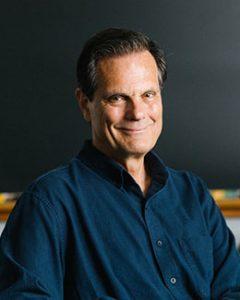
Steven E. Knotek is an Associate Research Professor in the School of Education at the University of North Carolina at Chapel Hill. He received his doctorate in school psychology at the University of California at Berkeley. Dr. Knotek’s research focuses on the design and implementation of social innovations that promote child and youth development.

Jennifer C. Mann is a Research Scientist in the Center for Child and Family Policy in the Sanford School of Public Policy at Duke University. She received her doctorate in Teacher Education and Learning Sciences from North Carolina State University. Dr. Mann’s research interests include education for multilingual learners, culturally sustaining critical pedagogies, and the social-emotional well-being of marginalized students.
Categories: Collaboration, English learners, Teacher leadership



CURRENT ISSUE
Recent Issues
LEARNING WITH AI
February 2026
Generative AI can be a powerful tool for professional learning design and...
WHAT STUDENTS NEED NOW
December 2025
For all students to thrive, we need to understand who they are and what...
LEARNING COMMUNITIES FOR LEADERS
October 2025
Leaders need opportunities to connect, learn, and grow with peers just as...
MAXIMIZING RESOURCES
August 2025
This issue offers advice about making the most of professional learning...