
Learning Forward
Equity and excellence in teaching and learning.

IDEAS
Member spotlight: Rosemary Seitel
By Suzanne Bouffard
Categories: Career pathways, Learning Forward Academy, TechnologyFebruary 2026

Rosemary Seitel is a longtime Learning Forward member who has been active in many aspects of the organization. She is currently vice chair of fundraising for the Learning Forward Foundation and serves on the board of directors for the Learning Forward New Jersey affiliate, where she is a past president. Drawing on her background as a former district technology leader and administrator, she now serves as a consultant and professional learning facilitator specializing in school leadership and the integration of AI in education.
How did you become involved in professional learning about technology?
My love of technology started a long time ago when I was a teacher in Leonia, New Jersey. Back then, we had computers on carts that we rolled into classrooms. The school leadership asked me to help with technology across the school and then I became a district co-coordinator of technology and later a specialist in technology across the curriculum. Since retiring from full-time education, I’ve continued my consultancy role with the New Jersey Principals and Supervisors Association, specializing in leadership and AI integration. I now lead workshops that translate AI into practical strategies for a broad range of audiences, from K-12 administrators and teachers to community library groups and adult learners.
What does your AI professional learning look like?
The goal is to raise the capacity of humans to do well in this world with AI. Educators are not just users of AI — we are architects of learning.
For Learning Forward New Jersey, I helped develop a virtual Chat and Chew session that was open to everyone. We discussed an AI article from The Learning Professional and hosted experts who have spoken at Learning Forward conferences.
My AI consultancy is built on a foundation of sound pedagogy rather than technology for its own sake. The question isn’t whether AI belongs; it’s how we integrate it in ways that actively strengthen instruction, leadership, and human connection. Each session begins with a diagnostic question: “What is the specific problem you are trying to solve?” By anchoring our work within frameworks such as Universal Design for Learning and Multi-Tiered System of Supports, we address critical needs like student achievement and scalable differentiation. This inquiry-based approach allows educators to explore AI through their own unique problems of practice, ensuring they leave not just with a toolset but with a clear vision for classroom implementation and a commitment to ongoing reflection.
We connect these conversations to the Standards for Professional Learning. One example is the Culture of Collaborative Inquiry standard: By sharing ideas, asking questions, and learning from one another, teachers build a common understanding of how to use AI responsibly and effectively to support all students.
In what other ways has Learning Forward been valuable in your work?
The Learning Forward Academy was a life-changing experience for me, professionally and personally. It brought together a community to truly listen to each other in order to learn and grow. I developed the skills to identify a problem of practice, create a theory of action, and think systemically about change. I continue to apply those same principles today, including in my work with AI.
What do you plan to focus on in the near future?
Leading in 2026 requires a shift in mindset: AI is not a tech initiative, but a human-capacity movement. Success will belong to leaders who create thoughtful conditions for exploration and understand their responsibility for shaping how learning evolves.
For me, the focus is always about the learning, not the tool. Whether I was teaching the first wave of educators how to navigate Microsoft Word or now, as I am helping today’s leaders harness agentic AI, the goal is fostering a community of learners. Professional learning isn’t just about technical proficiency; it’s about building the skills that open a mindset to what’s possible.
Download pdf here.

Suzanne Bouffard is senior vice president of communications and publications at Learning Forward. She is the editor of The Learning Professional, Learning Forward’s flagship publication. She also contributes to the Learning Forward blog and webinars. With a background in child development, she has a passion for making research and best practices accessible to educators, policymakers, and families. She has written for many national publications including The New York Times and the Atlantic, and previously worked as a writer and researcher at the Harvard Graduate School of Education. She has a Ph.D. in developmental psychology from Duke University and a B.A. from Wesleyan University. She loves working with authors to help them develop their ideas and voices for publication.
Categories: Career pathways, Learning Forward Academy, Technology


CURRENT ISSUE
Recent Issues
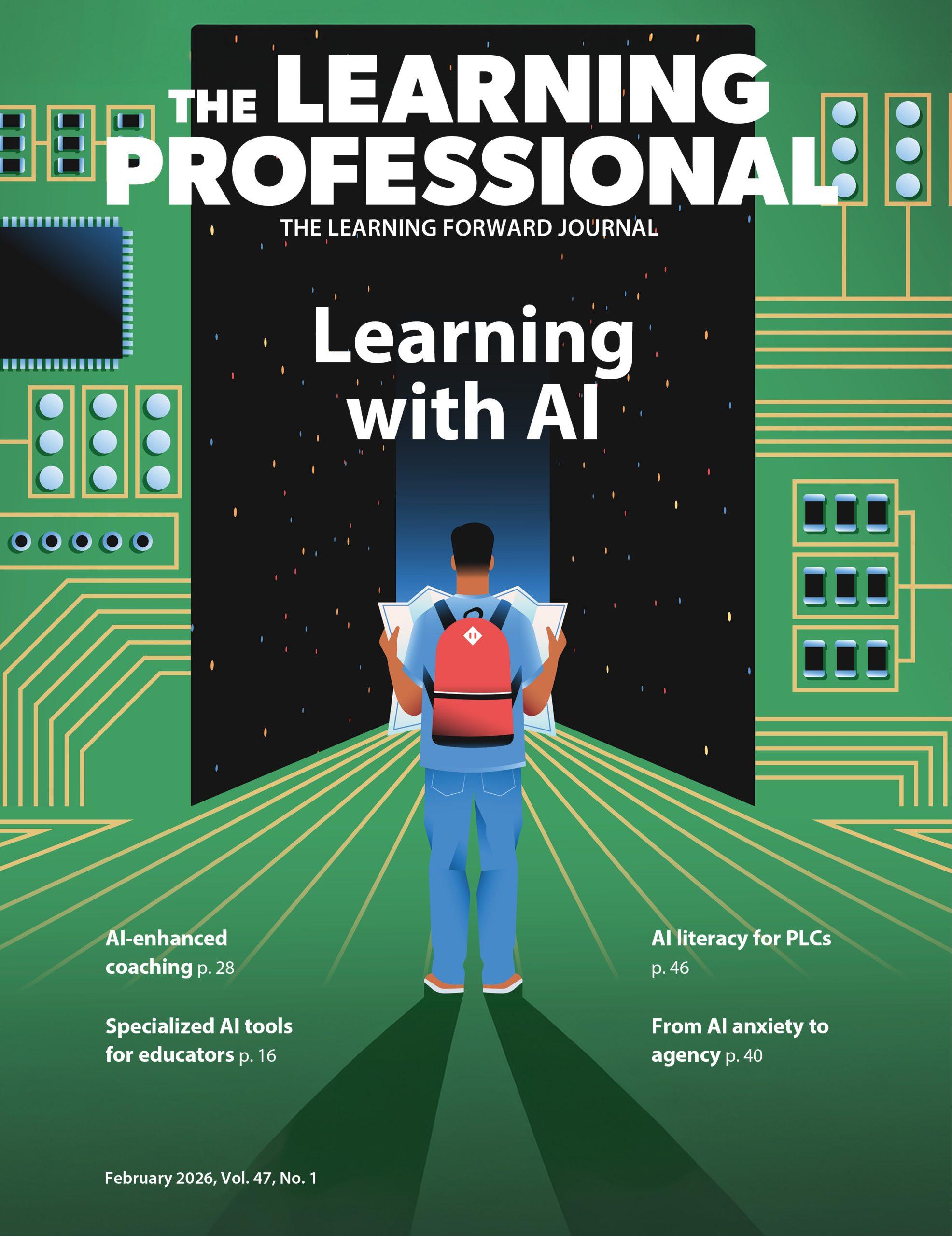
LEARNING WITH AI
February 2026
Generative AI can be a powerful tool for professional learning design and...
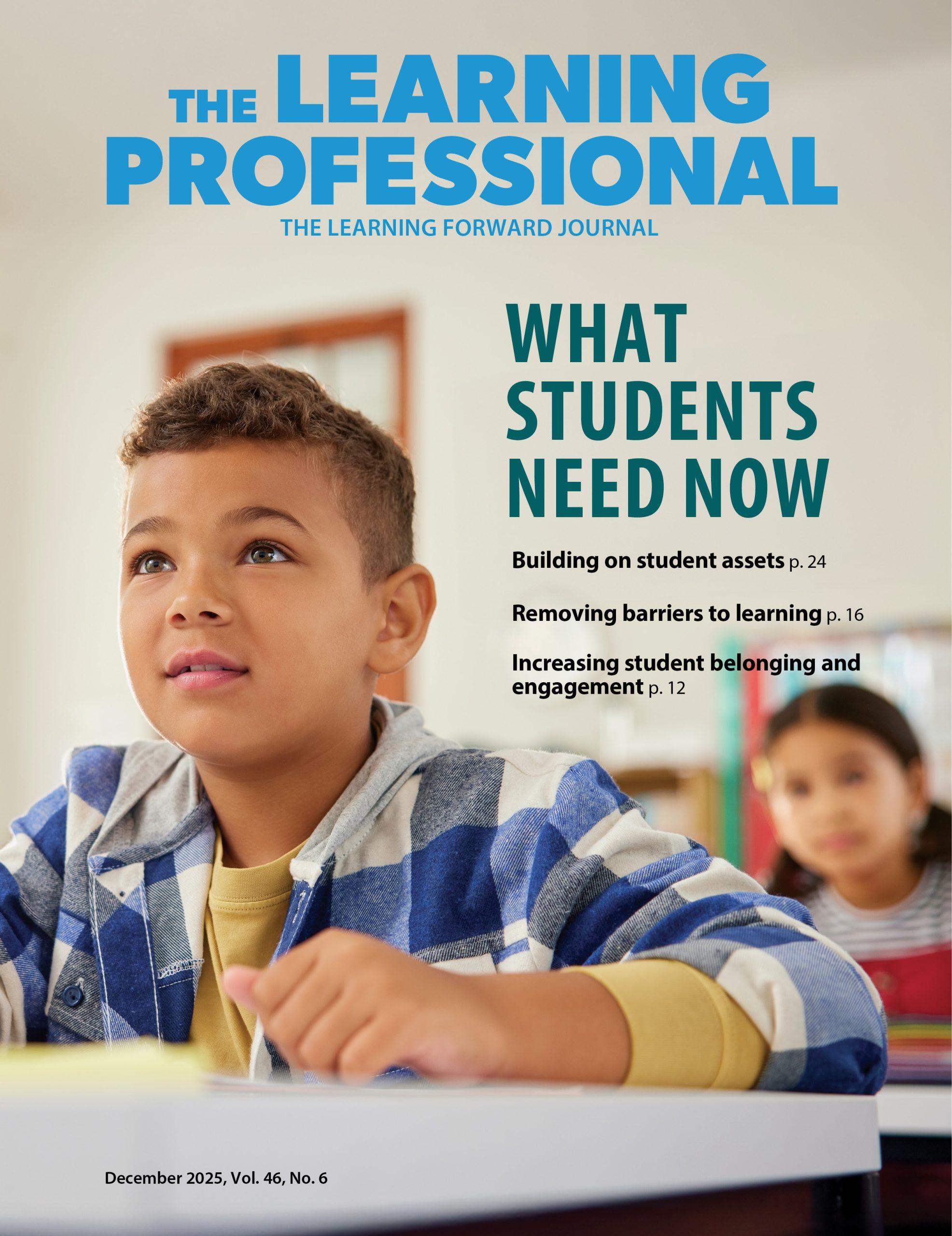
WHAT STUDENTS NEED NOW
December 2025
For all students to thrive, we need to understand who they are and what...
LEARNING COMMUNITIES FOR LEADERS
October 2025
Leaders need opportunities to connect, learn, and grow with peers just as...
MAXIMIZING RESOURCES
August 2025
This issue offers advice about making the most of professional learning...