
Learning Forward
Equity and excellence in teaching and learning.

Make The Most Of Every Day
Examine your practice to sift out time wasters
By Learning Forward
Categories: ResourcesOctober 2015

Read the remaining content with membership access. Join or log in below to continue.
Sed ut perspiciatis unde omnis iste natus error sit voluptatem accusantium doloremque laudantium, totam rem aperiam, eaque ipsa quae ab illo inventore veritatis et quasi architecto beatae vitae dicta sunt explicabo. Nemo enim ipsam voluptatem quia voluptas sit aspernatur aut odit aut fugit, sed quia consequuntur magni dolores eos qui ratione voluptatem sequi nesciunt. Neque porro quisquam est, qui dolorem ipsum quia dolor sit amet, consectetur, adipisci velit, sed quia non numquam eius modi tempora incidunt ut labore et dolore magnam aliquam quaerat voluptatem.
Time and task management matrix

References
Bryk, A.S. & Schneider, B. (2004). Trust in schools: A core resource for improvement. New York, NY: Russell Sage Foundation.
Collins, J. (2001). Good to great: Why some companies make the leap … and others don’t. New York, NY: HarperCollins.
Covey, S. (1989). The 7 habits of highly effective people. New York, NY: Simon & Schuster.
Darley, J.M. & Batson, C.D. (1973). From Jerusalem to Jericho: A study of situational and dispositional variables in helping behavior. Journal of Personality and Social Psychology, 27(1), 100-108.
Garmston, R. & Wellman, B. (2008). The adaptive school: A sourcebook for developing collaborative groups. Norwood, MA: Christopher-Gordon Publishers.
Goleman, D. (2013). Focus: The hidden driver of excellence. New York, NY: Harper.
Perkins, D. (2003). King Arthur’s round table: How collaborative conversations create smart organizations. Hoboken, NJ: John Wiley & Sons.
Sanford, C. (1995). Myths of organizational effectiveness at work. Battle Ground, WA: SpringHill Publications.
Taylor, F.W. (1911). The principles of scientific management. New York, NY: W.H. Norton.
Zimbardo, P. & Boyd, J. (2008). The time paradox: The new psychology of time that will change your life. New York, NY: Simon & Schuster.
Learning Forward is the only professional association devoted exclusively to those who work in educator professional development. We help our members plan, implement, and measure high-quality professional learning so they can achieve success with their systems, schools, and students.
Categories: Resources
CURRENT ISSUE
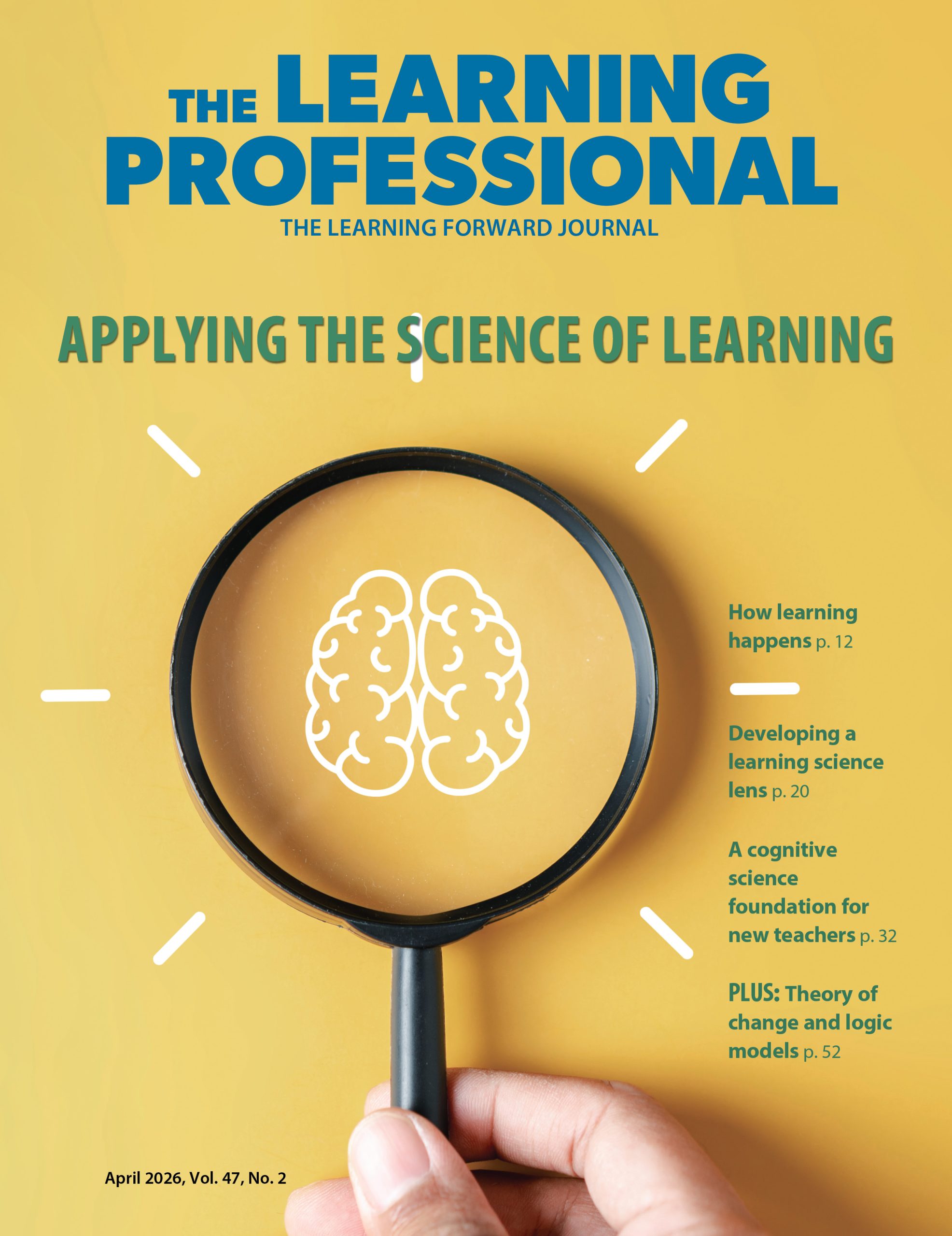
Recent Issues
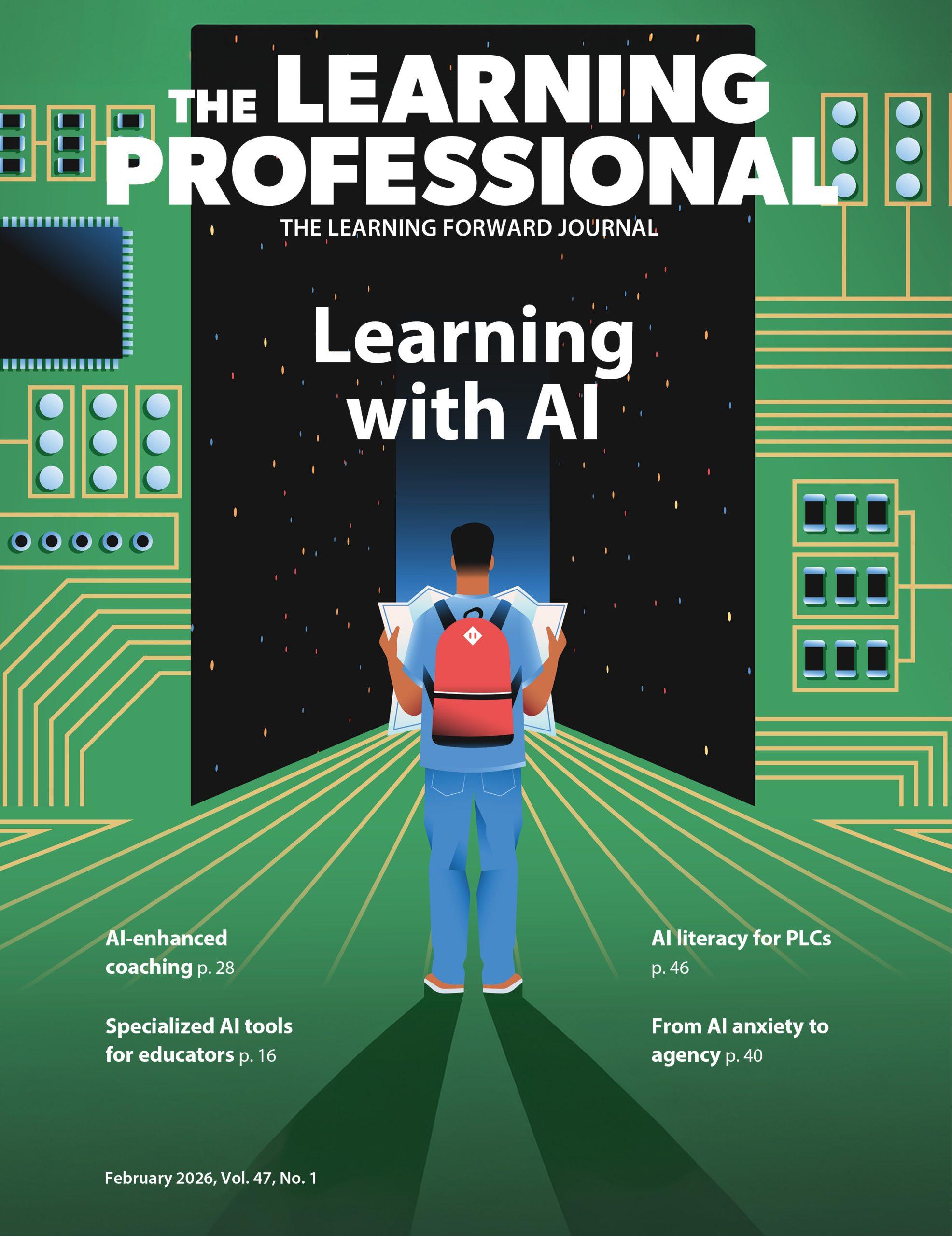
LEARNING WITH AI
February 2026
Generative AI can be a powerful tool for professional learning design and...
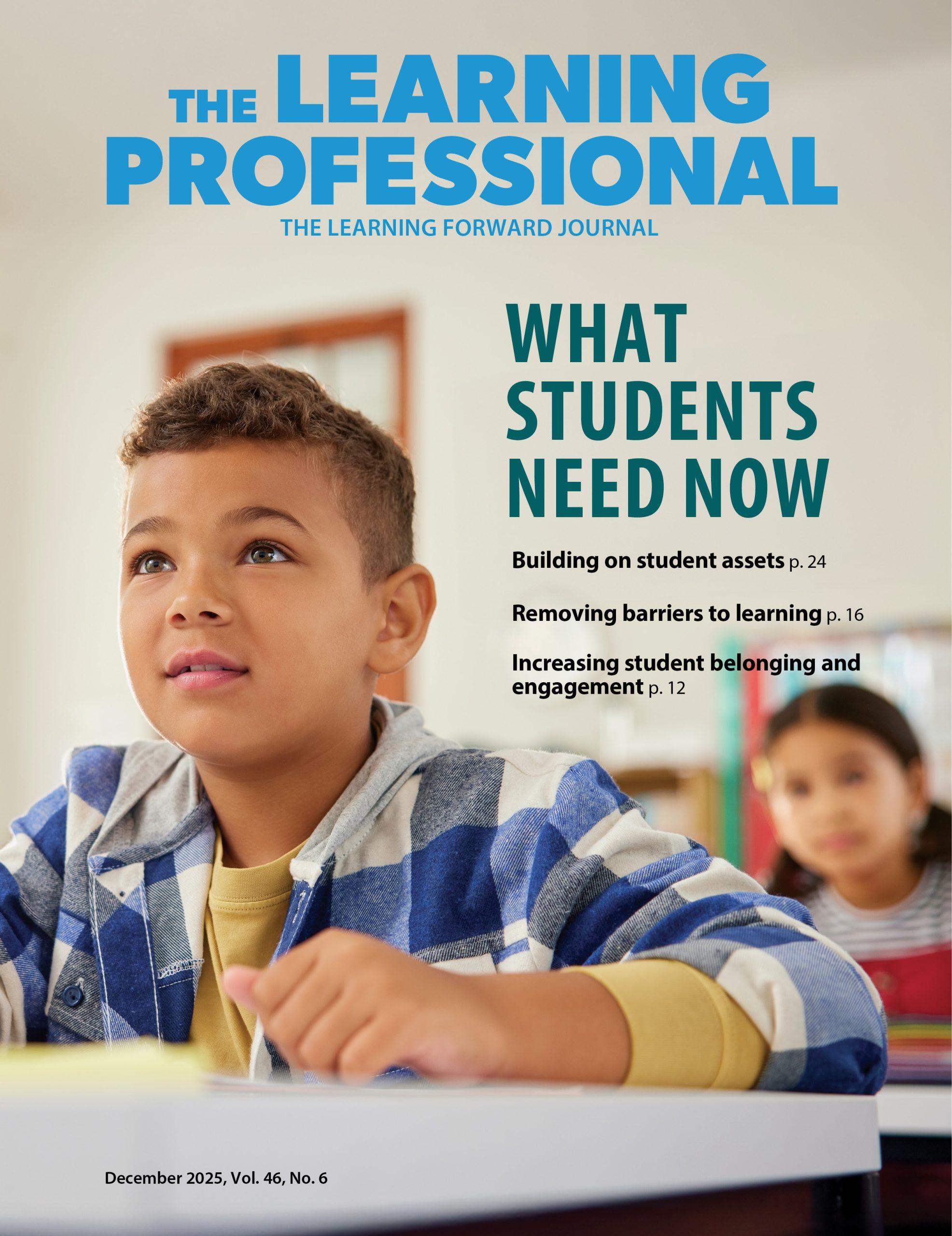
WHAT STUDENTS NEED NOW
December 2025
For all students to thrive, we need to understand who they are and what...
LEARNING COMMUNITIES FOR LEADERS
October 2025
Leaders need opportunities to connect, learn, and grow with peers just as...
MAXIMIZING RESOURCES
August 2025
This issue offers advice about making the most of professional learning...