
Learning Forward
Equity and excellence in teaching and learning.

FOCUS
Science curriculum gets a boost from teacher leaders
By Sarah E. Stults, Kayla Cherry, Julie A. Jacobi and Rachel Shefner
Categories: Continuous improvement, Instructional materials/curriculum, Learning communities, Reaching all students, Teacher leadershipDecember 2023

A high-quality curriculum is vital for students to meet academic standards, and educators need professional learning to implement the materials effectively and align their instructional practices accordingly (Chu et al., 2022; Short & Hirsh, 2020). However, the growing movement for curriculum-based professional learning often overlooks an important resource for implementation: teacher leaders. Unlike administrators, teacher leaders continue in the classroom while also demonstrating, facilitating, or building capacity among their peers. This positions them well to lead the implementation of new curricula. Unfortunately, many teachers do not see themselves as leaders, nor do their supervisors or the general public (Bybee, 2023). Recognizing that teacher leaders play an essential role in curriculum adoption and implementation, the Chicago Public Schools Department of STEM (Science, Technology, Engineering, and Math)
Read the remaining content with membership access. Join or log in below to continue.
Sed ut perspiciatis unde omnis iste natus error sit voluptatem accusantium doloremque laudantium, totam rem aperiam, eaque ipsa quae ab illo inventore veritatis et quasi architecto beatae vitae dicta sunt explicabo. Nemo enim ipsam voluptatem quia voluptas sit aspernatur aut odit aut fugit, sed quia consequuntur magni dolores eos qui ratione voluptatem sequi nesciunt. Neque porro quisquam est, qui dolorem ipsum quia dolor sit amet, consectetur, adipisci velit, sed quia non numquam eius modi tempora incidunt ut labore et dolore magnam aliquam quaerat voluptatem.
A participant’s perspective
 “Teaching can be an isolating experience with few moments of collaboration, but as a member of (the master teacher leader cohort), I was part of a community of like-minded individuals who inspired me to continue to improve my practice so that my students had a more rich and transformational learning experience in science.”
— Andy DeVivo, a member of the first master teacher leader cohort in 2018. At that time, he was a 4th-grade math and science teacher. He continued to participate in the cohort until 2022, when he joined the Chicago Public Schools Department of STEM as the 4th-grade science specialist. He now serves as one of the facilitators of the master teacher leader cohort.
References
Barnes, M. & Gonzales, J. (2015). Hacking education: 10 quick fixes for every school. Times 10 Publications.
Brown, B.A. (2019). Science in the city: Culturally relevant STEM education. Harvard Education Press.
Bybee, R.W. (2023). Leadership by and for science teachers. NSTA Press.
Chu, E., McCarty, G., Gurny, M., & Madhani, N. (2022). Curriculum-based professional learning: The state of the field. Center for Public Research and Leadership.
Duckworth, S. (n.d.). Wheel of power/privilege. sdpride.org/wp-content/uploads/2022/11/Wheel-of-Power-Privilege-Sylvia-Duckworth.pdf
Grissom, J.A., Egalite, A.J., & Lindsay, C.A. (2021). How principals affect students and schools: A systematic synthesis of two decades of research. The Wallace Foundation.
Jacobson, D. & Mustafa, N. (2019). Social identity map: A reflexivity tool for practicing explicit positionality in critical qualitative research. International Journal of Qualitative Methods, 18. doi.org/10.1177/1609406919870075
Learning Forward. (2022). Standards for Professional Learning. Author.
Leithwood, K., Louis, K.S, Anderson, S., & Wahlstrom, K. (2004). Executive summary: How leadership influences student learning. The Wallace Foundation.
Miller, B., Moon, J., Elko, S., & Spencer, D.B. (2000). Teacher leadership in mathematics and science: Casebook and facilitator’s guide. Heinemann.
Short, J. & Hirsh, S. (2020). The elements: Transforming teaching through curriculum-based professional learning. Carnegie Corporation of New York.
Wenner, J.A. & Campbell, T. (2017). The theoretical and empirical basis of teacher leadership: A review of the literature. Review of Educational Research, 87(1), 134-171.

Sarah E. Stults (sstults@luc.edu) is a science instructional coach at Loyola University Center for Science and Math Education.

Kayla Cherry (kcherry@luc.edu) is a science instructional coach at the Loyola University Center for Science and Math Education.
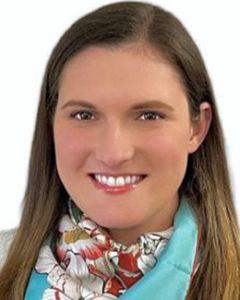
Julie A. Jacobi (jjacobi@luc.edu) is the assistant director for science programs at the Loyola University Center for Science and Math Education.

Rachel Shefner (rshefne@luc.edu) is Loyola University Chicago’s assistant provost.
Categories: Continuous improvement, Instructional materials/curriculum, Learning communities, Reaching all students, Teacher leadership



CURRENT ISSUE
Recent Issues

LEARNING WITH AI
February 2026
Generative AI can be a powerful tool for professional learning design and...

WHAT STUDENTS NEED NOW
December 2025
For all students to thrive, we need to understand who they are and what...
LEARNING COMMUNITIES FOR LEADERS
October 2025
Leaders need opportunities to connect, learn, and grow with peers just as...
MAXIMIZING RESOURCES
August 2025
This issue offers advice about making the most of professional learning...