
Learning Forward
Equity and excellence in teaching and learning.

FOCUS
How professional learning can help close digital divides
By Zac Chase
Categories: Reaching all students, TechnologyApril 2024

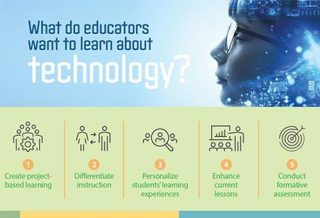
The nature of the digital divide in schools is changing. Once understood to be about gaps in access to computer and internet technology across demographic and geographic groups, the gap is now more complex. Schools still experience inequity in technology, but it is as much about educators’ capacity and opportunity to apply technology in meaningful ways as it is about software licenses or internet speed. To close those gaps and realize the potential of technology for all students, we need to reimagine professional learning about and with technology. That is one of the main recommendations of the new National Educational Technology Plan: A Call to Action for Closing the Digital Access, Design, and Use Divides, which was published by the U.S. Department of Education in
Read the remaining content with membership access. Join or log in below to continue.
Sed ut perspiciatis unde omnis iste natus error sit voluptatem accusantium doloremque laudantium, totam rem aperiam, eaque ipsa quae ab illo inventore veritatis et quasi architecto beatae vitae dicta sunt explicabo. Nemo enim ipsam voluptatem quia voluptas sit aspernatur aut odit aut fugit, sed quia consequuntur magni dolores eos qui ratione voluptatem sequi nesciunt. Neque porro quisquam est, qui dolorem ipsum quia dolor sit amet, consectetur, adipisci velit, sed quia non numquam eius modi tempora incidunt ut labore et dolore magnam aliquam quaerat voluptatem.
Disclaimer from the U.S. Department of Education
This article contains resources that are provided for the reader’s convenience. The inclusion of these materials is not intended to reflect its importance, nor is it intended to endorse any views expressed or products or services offered. These materials may contain the views and recommendations of various subject matter experts as well as hypertext links, contact addresses, and websites to information created and maintained by other public and private organizations. The opinions expressed in any of these materials do not necessarily reflect the positions or policies of the U.S. Department of Education. The U.S. Department of Education does not control or guarantee the accuracy, relevance, timeliness, or completeness of any outside information included in these materials.
References
Bughin, J., Hazan, E., Lund, S., Dahlström, P., Wiesinger, A., & Subramaniam, A. (2018). Skill shift: Automation and the future of the workforce. McKinsey & Company.
CAST. (2018). The UDL guidelines. udlguidelines.cast.org/
City, E.A., Elmore, R., Fiarman, S., & Teitel, L. (2009). Instructional rounds in education. Harvard Educational Publishing Group.
Cuban, L. (2018). The flight of a butterfly or the path of a bullet? Using technology to transform teaching and learning. Harvard Education Press.
Every Student Succeeds Act, 20 U.S.C. § 6301 (2015). www.congress.gov/bill/114th-congress/senate-bill/1177
Papert, S. & Solomon, C. (1971). Twenty things to do with a computer. Artificial Intelligence Memo Number 248. Massachusetts Institute of Technology.
Reich, J. (2020). Failure to disrupt: Why technology alone can’t transform education. Harvard University Press.
U.S. Department of Education. (1996). Getting America’s students ready for the 21st century: Meeting the technology literacy challenge. Author. files.eric.ed.gov/fulltext/ED398899.pdf
U.S. Department of Education Office of Educational Technology. (2024). A call to action for closing the digital access, design, and use divides: 2024. Author.
U.S. Department of Education Office of Educational Technology. (n.d.a). Reconsidering educator learning time to improve student learning time. tech.ed.gov/stories/reconsidering-educator-learning-time-to-improve-student-learning-time/
U.S. Department of Education Office of Educational Technology. (n.d.b). State program facilitates the sharing of instructional technology coaches among districts. tech.ed.gov/stories/state-program-facilitates-the-sharing-of-instructional-technology-coaches-among-districts/
U.S. Department of Education Office of Educational Technology. (n.d.c). Designing wrap-around teacher support as a new normal. tech.ed.gov/stories/designing-wrap-around-teacher-support-as-a-new-normal/
Watters, A. (2023). Teaching machines: The history of personalized learning. MIT Press.

Zac Chase (Zachary.Chase@ed.gov) is Digital Equity Impact Fellow at the U.S. Department of Education Office of Educational Technology.
Categories: Reaching all students, Technology

CURRENT ISSUE
Recent Issues
MAXIMIZING RESOURCES
August 2025
This issue offers advice about making the most of professional learning...
MEASURING LEARNING
June 2025
To know if your professional learning is successful, measure educators’...
NAVIGATING NEW ROLES
April 2025
Whether you’re new to your role or supporting others who are new,...

LEARNING DESIGNS
February 2025
How we learn influences what we learn. This issue shares essential...